


Molten Tongues
31 January 2026 - 28 March 2026
Curator: Jake Treacy
Artist:
Artists: Ali Tahayori, Ara Dolatian, Dr Bon Mott _/\_, Cheng Ran, Dr Christian Thompson AO, Claybia (Cassandra Chilton and Molly O'Shaughnessy), Diego Ramírez, Diogo Evangelista, Emily Parsons-Lord, Felix Saturn, Glynn Urquhart, Hannah Hallam-Eames, Iluka Sax-Williams, Ioanna Sakellaraki, Joshua Serafin, Jenna Lee, Makiko Ryujin, Michael Jalaru Torres, Moorina Bonini, Morehshin Allahyari, Naomi Blacklock, Nicholas Burridge, Priyageetha Dia, Sha Sarwari, Shireen Taweel, Yhonnie Scarce, and Yumemi Hiraki.
Location:
Molten Tongues speaks in the primal, alchemical language of fire—a force that warms, consumes, ignites, transforms. Fire is at once origin and omen, a source of life and an agent of destruction.
This exhibition brings together works by contemporary Australian and international artists who engage fire as material, metaphor, and memory—tracing its roles across ritual and industry, ceremony and combustion, love and loss, technology and ecology.
Across cultures and temporalities, fire has shaped worlds. From First Nations land management to funerary burning of ‘hell banknotes’ to the industrial architectures of waste and energy, Molten Tongues explores the many tongues through which fire speaks—molten, flickering, fierce.
This exhibition is participating in Midsumma Festival's keynote program 'Time & Place'.

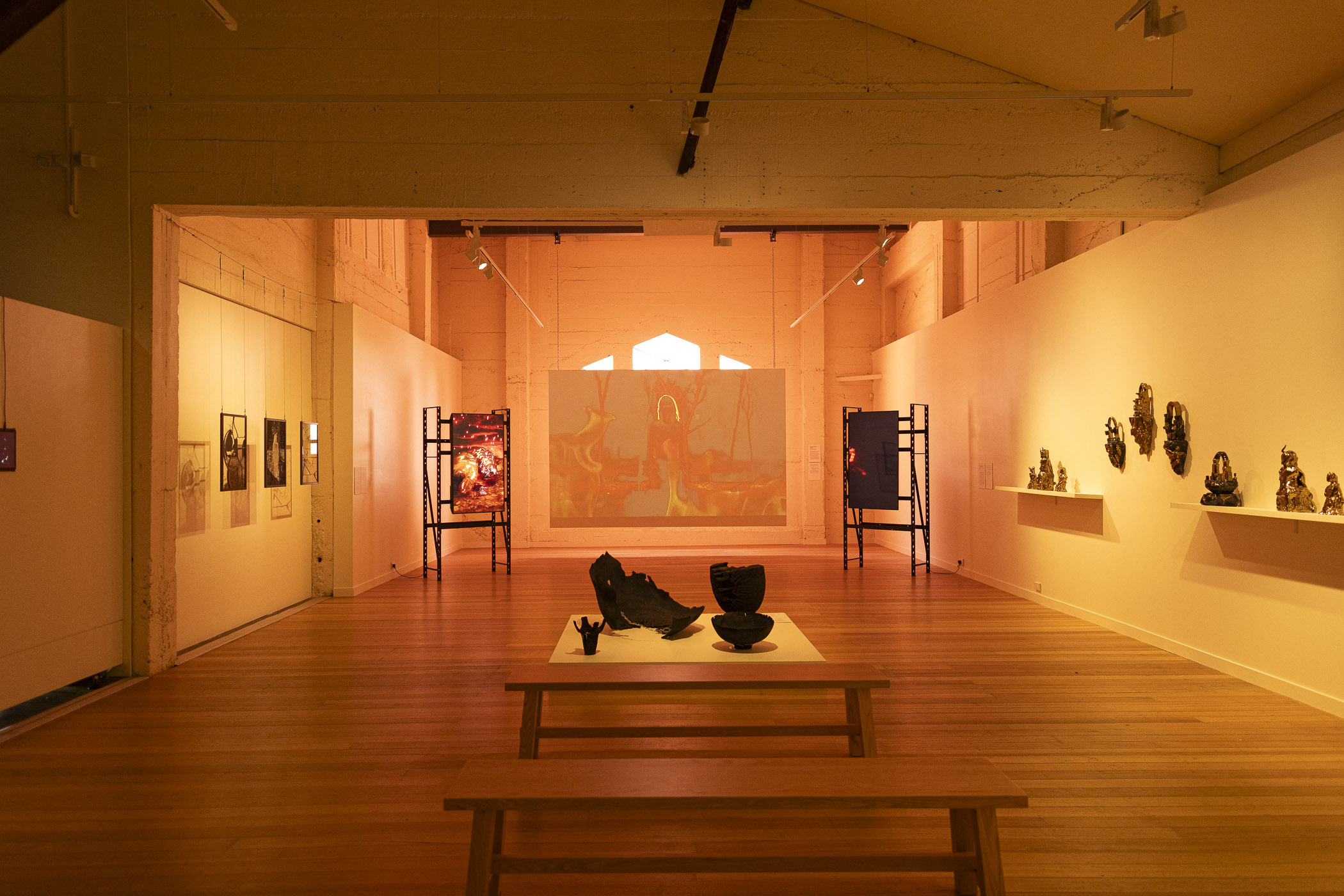
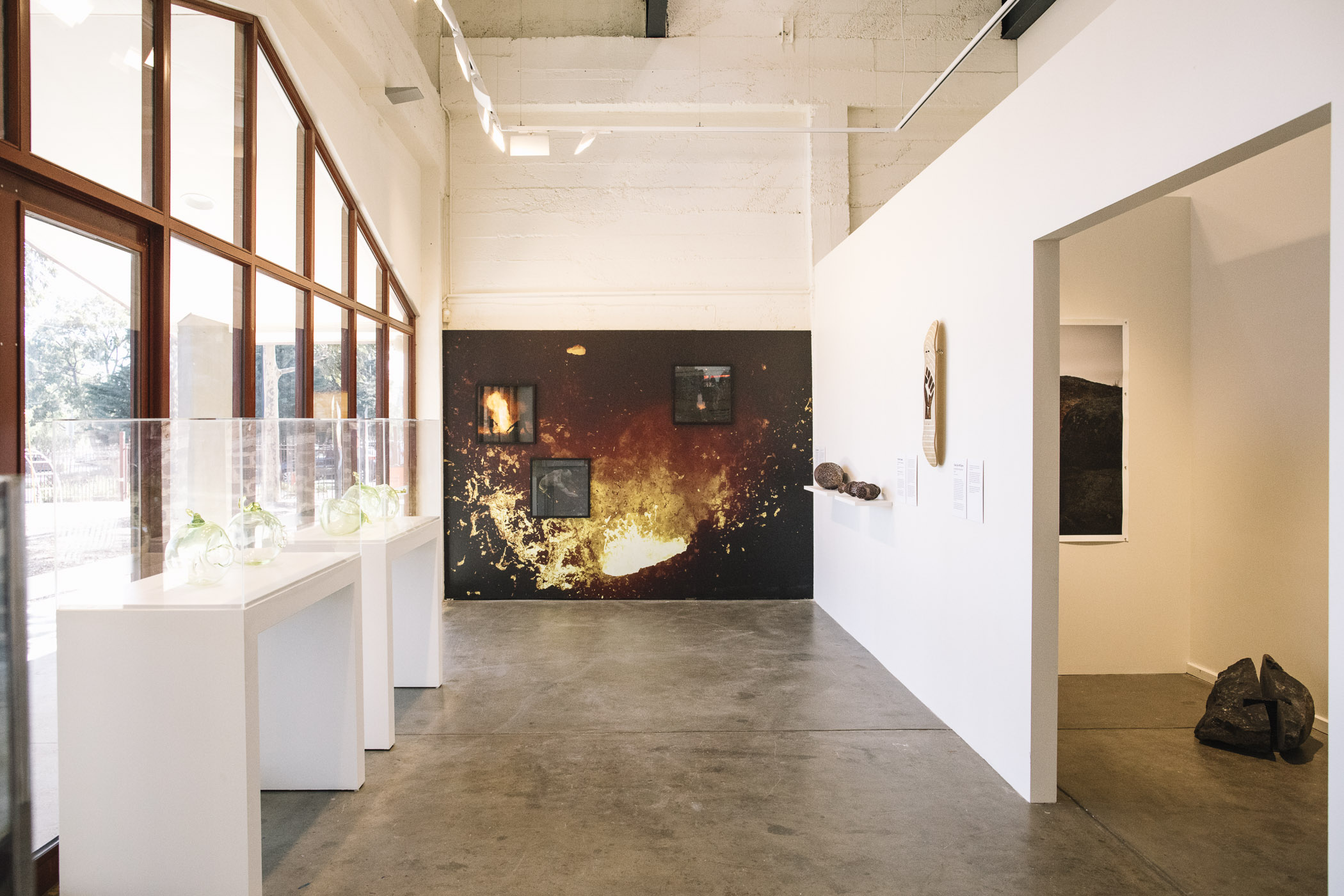
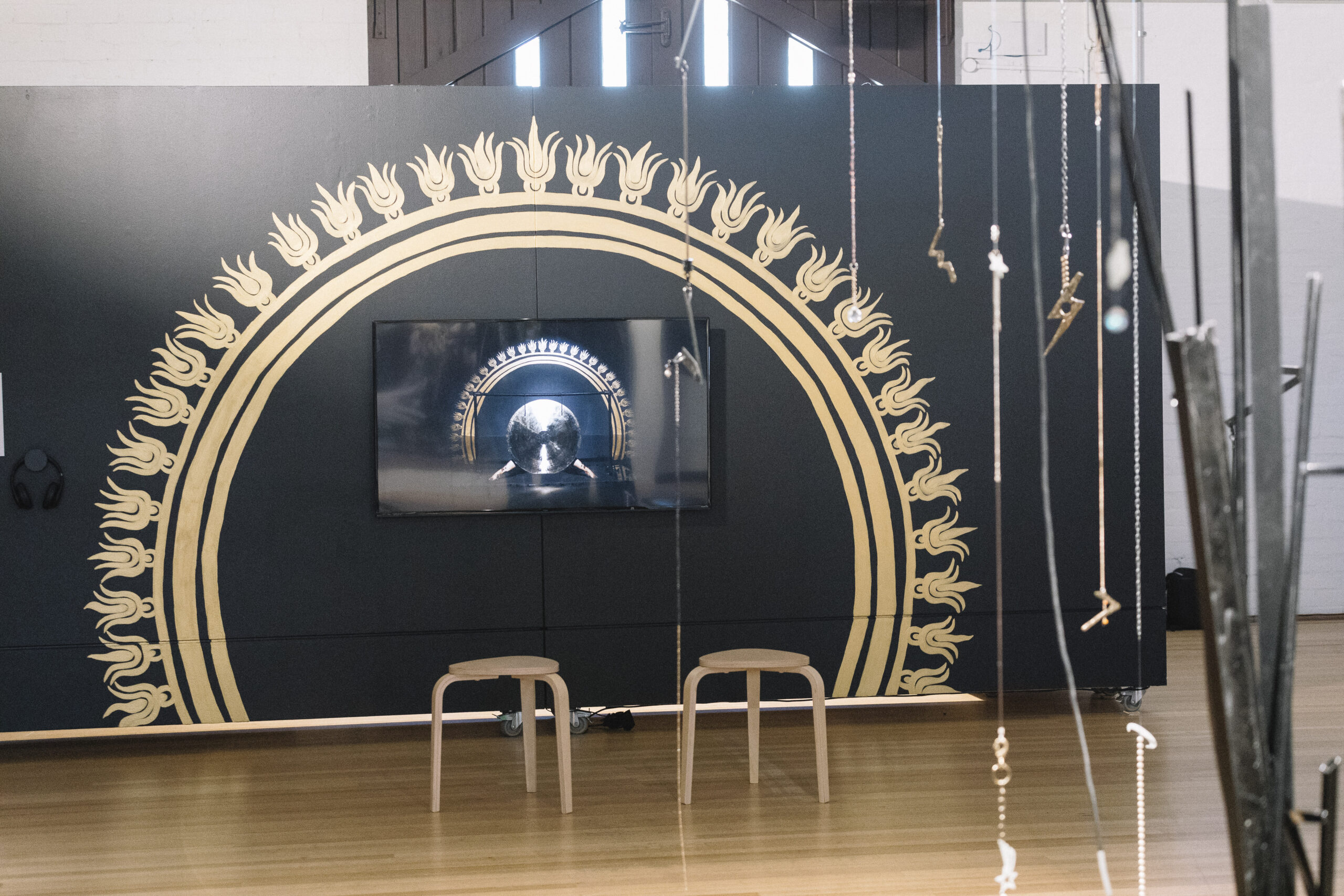
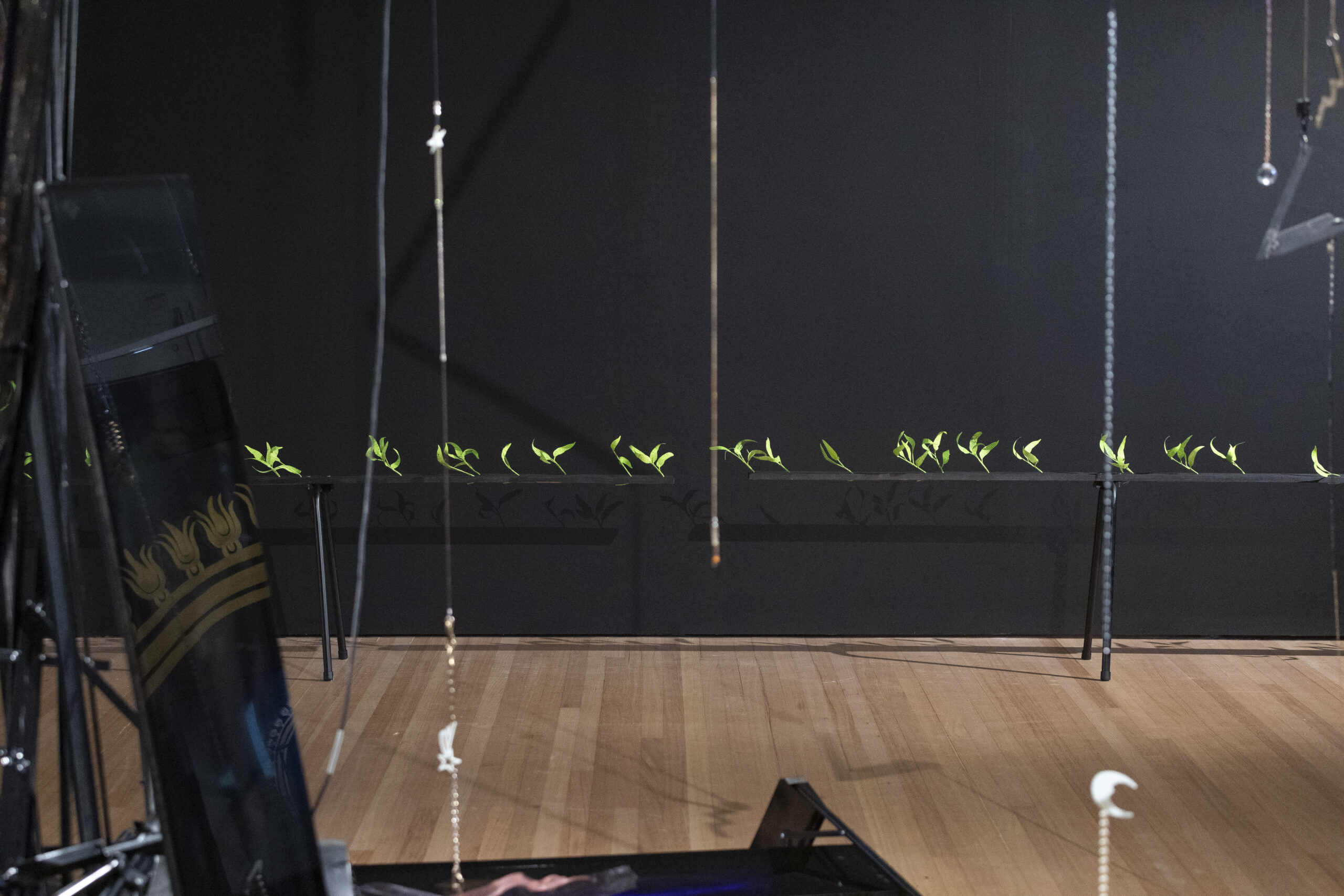
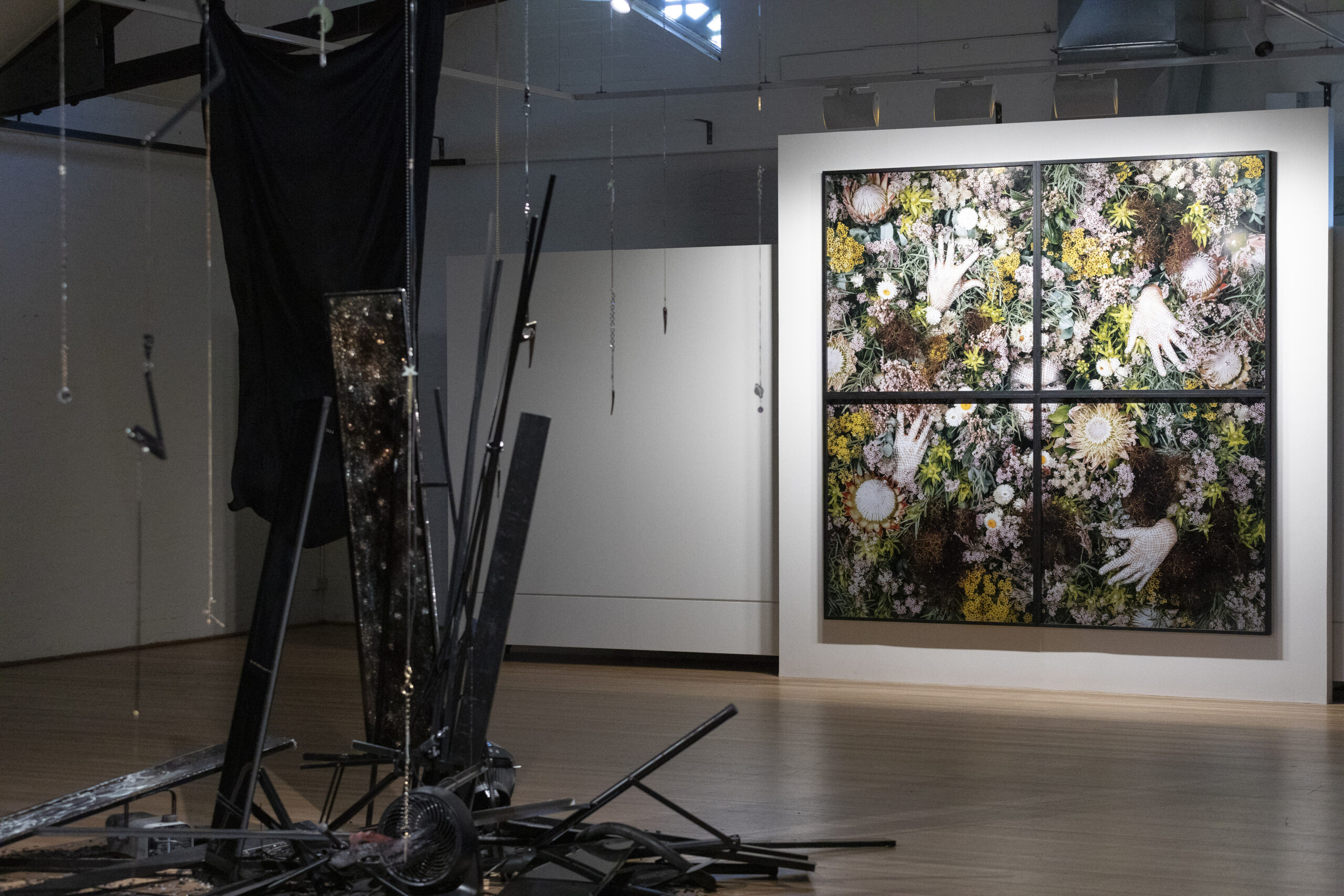
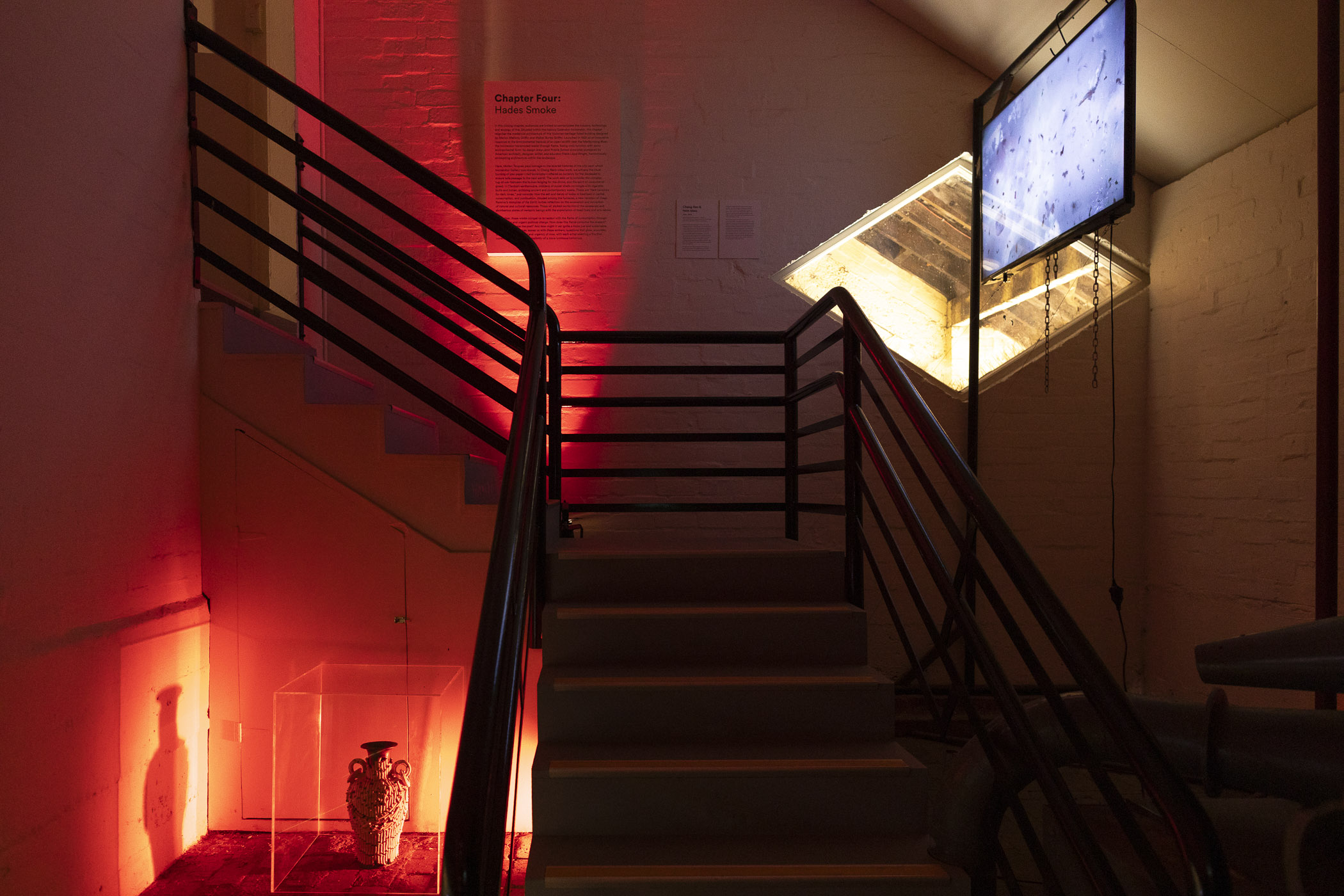
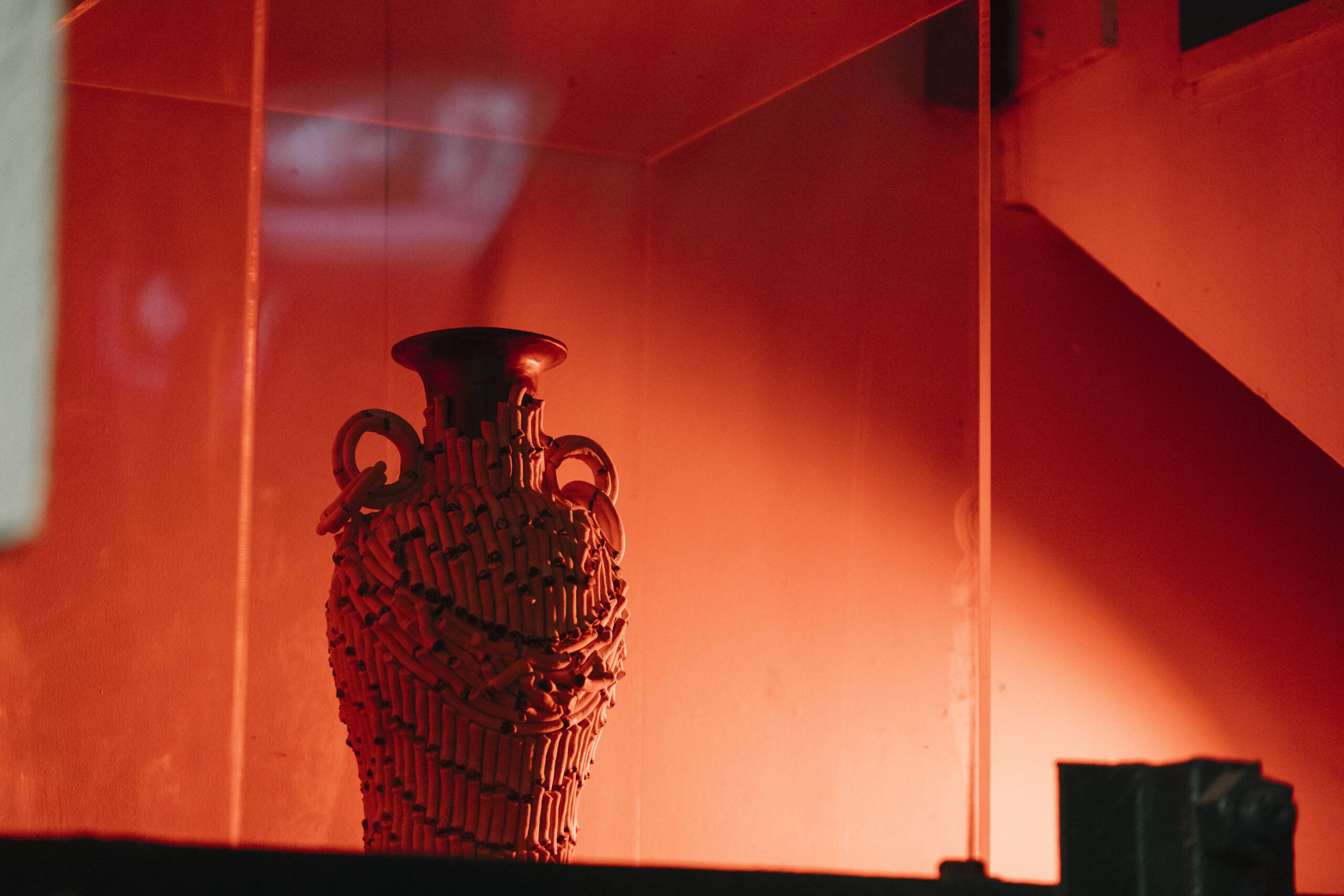
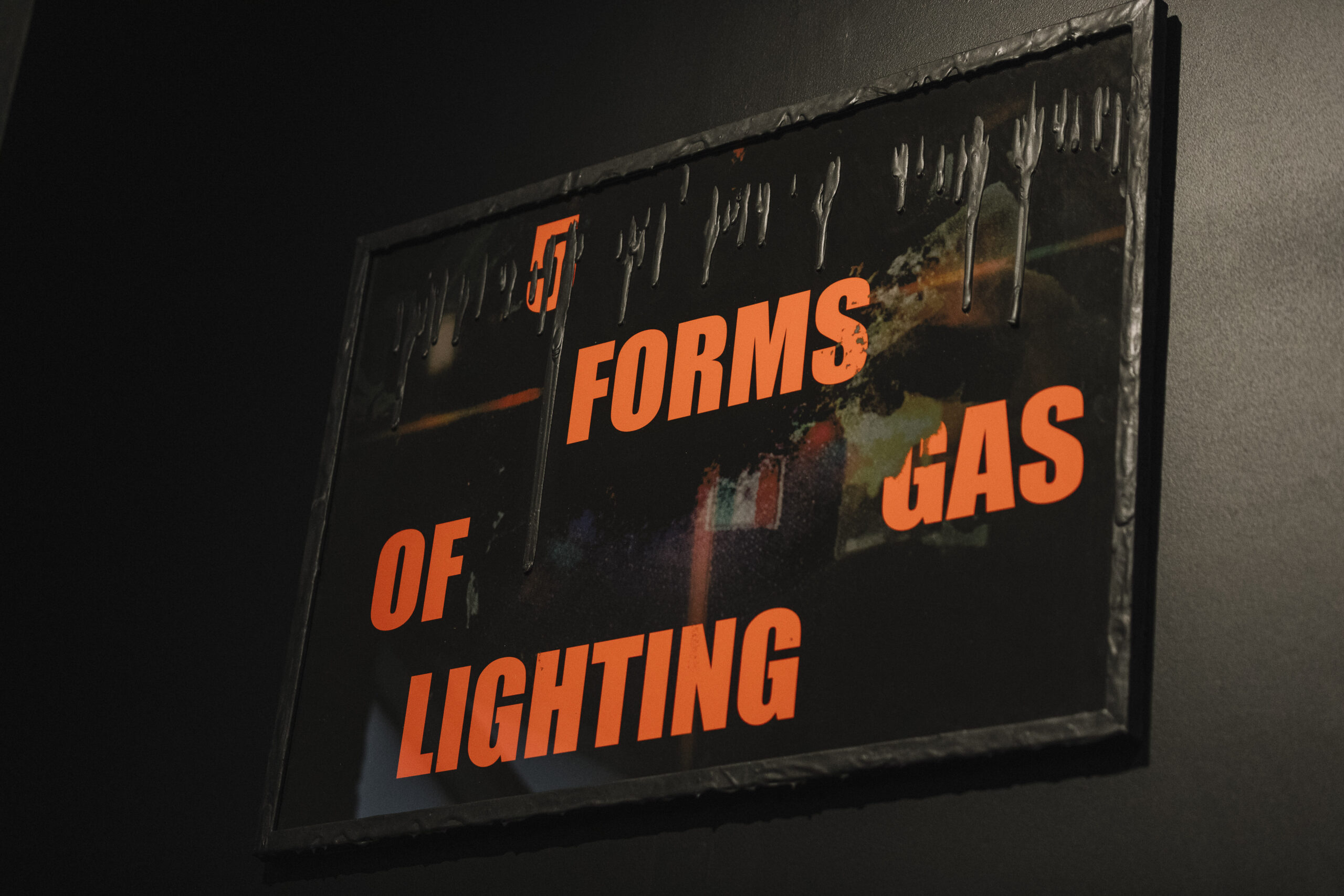
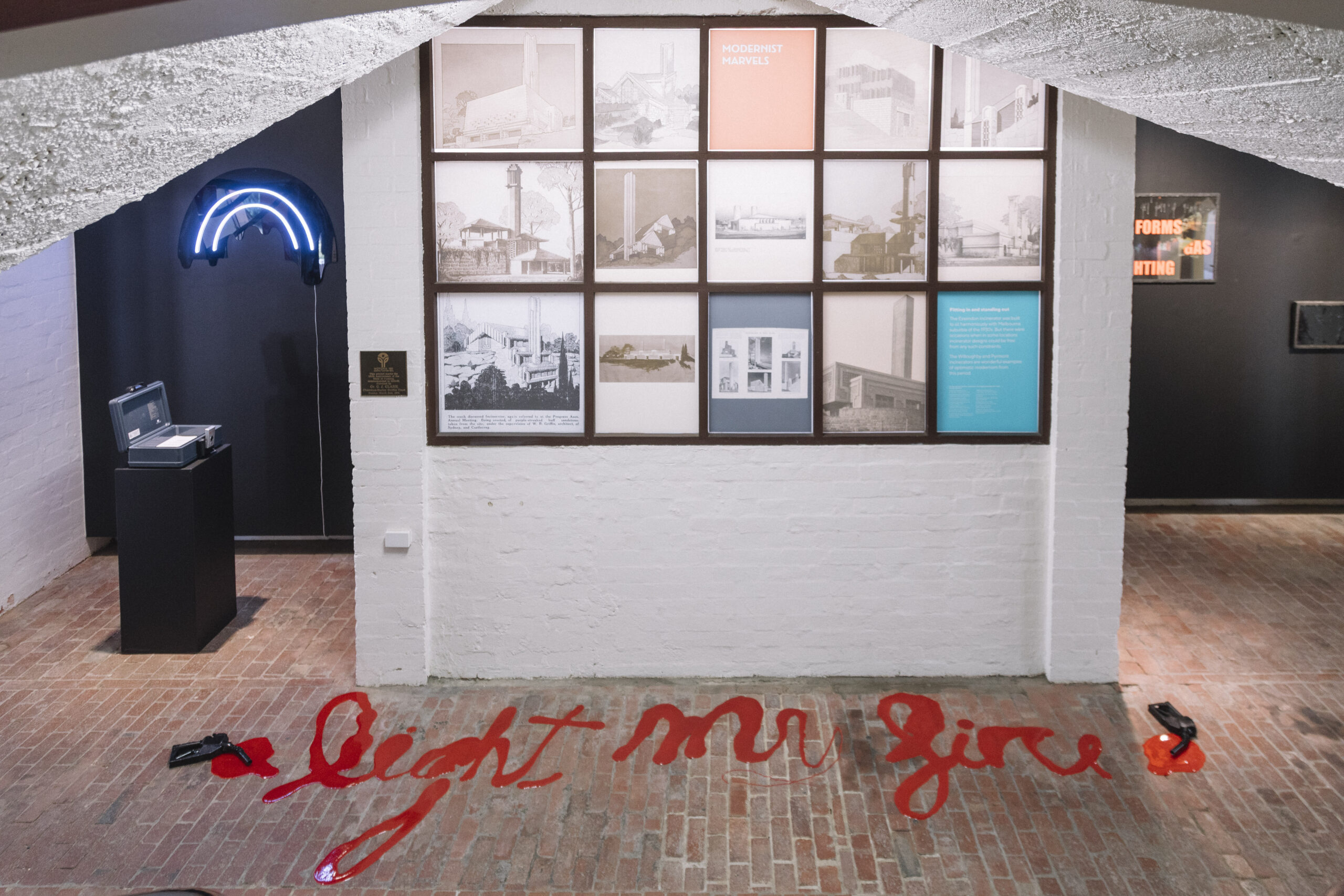
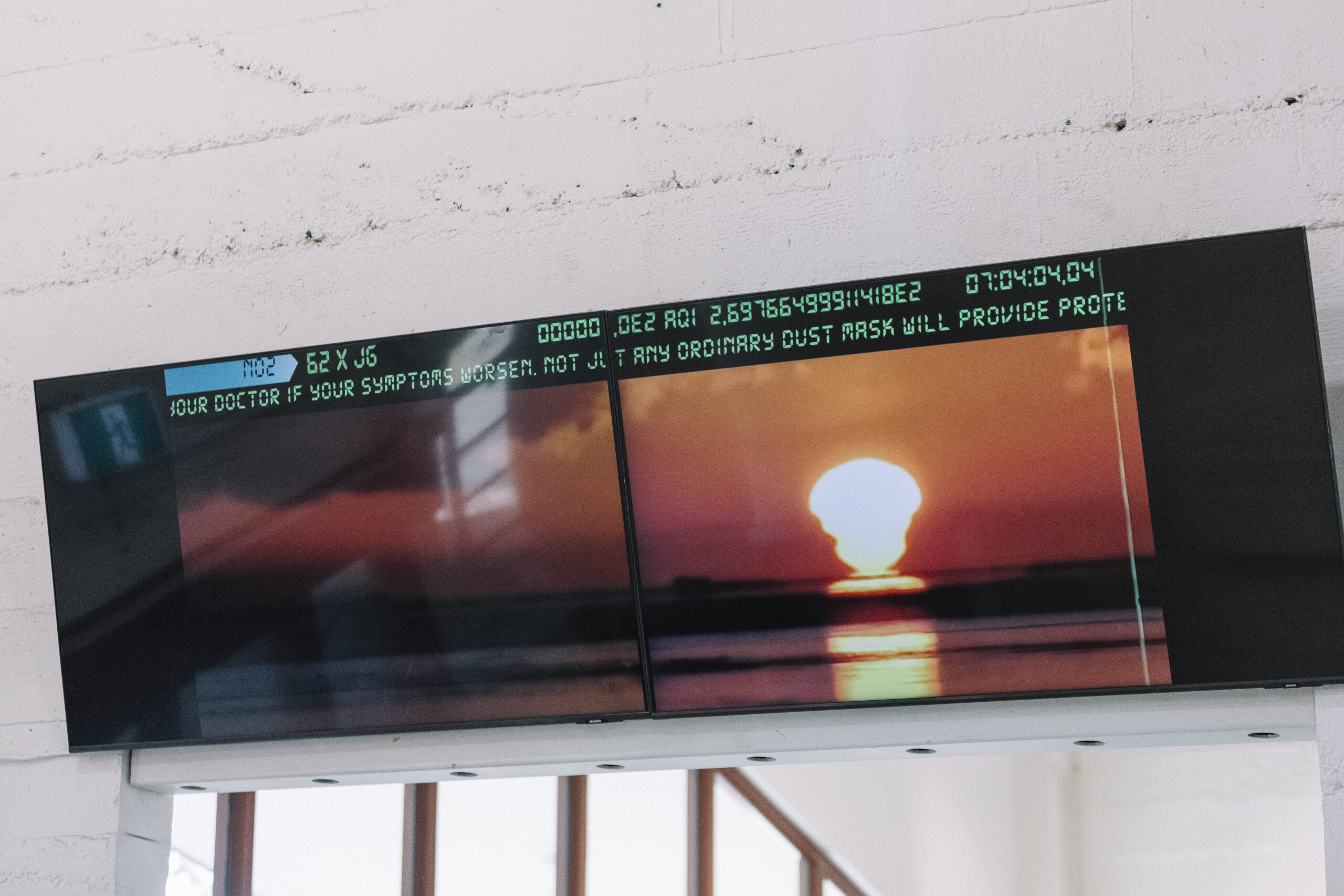
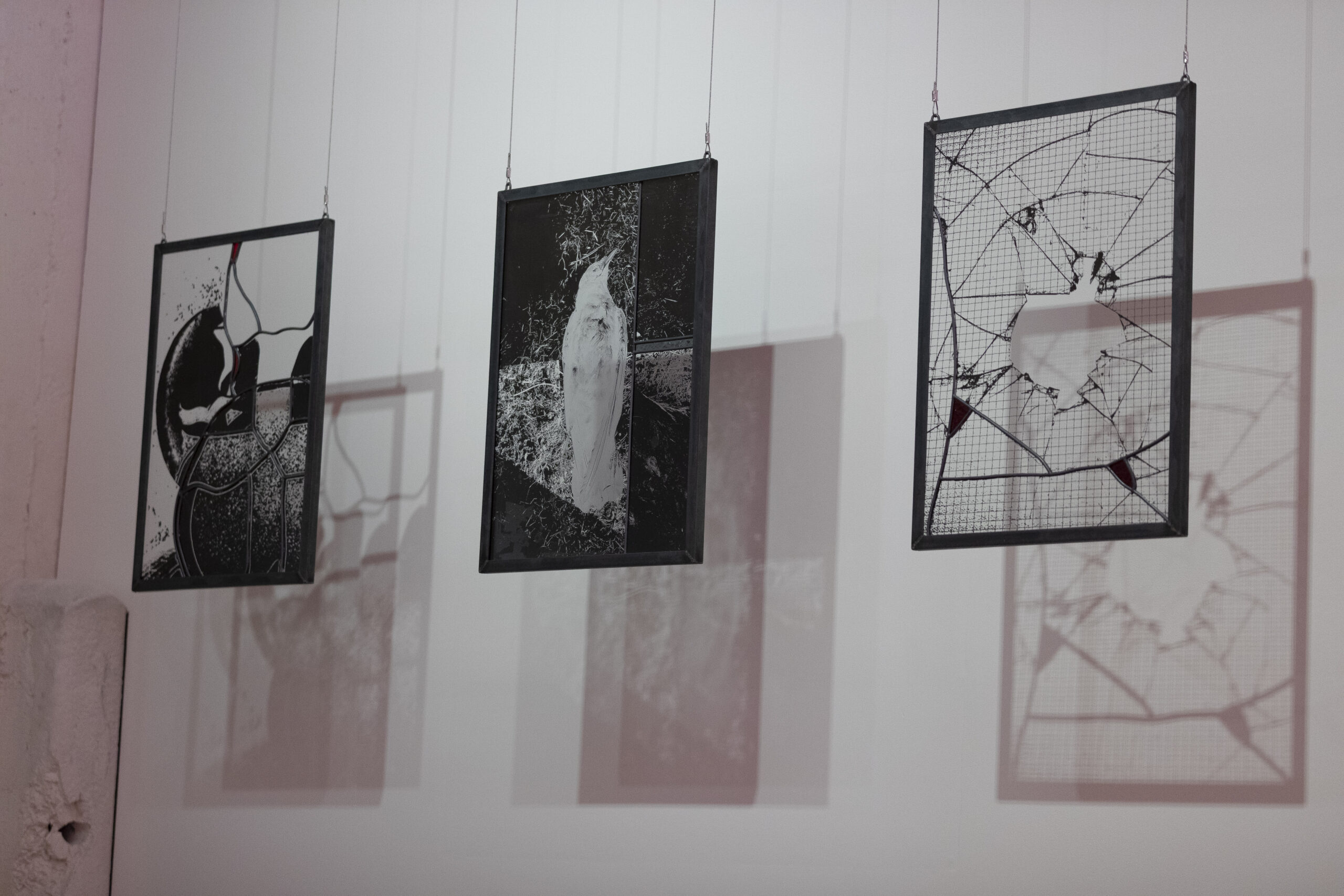
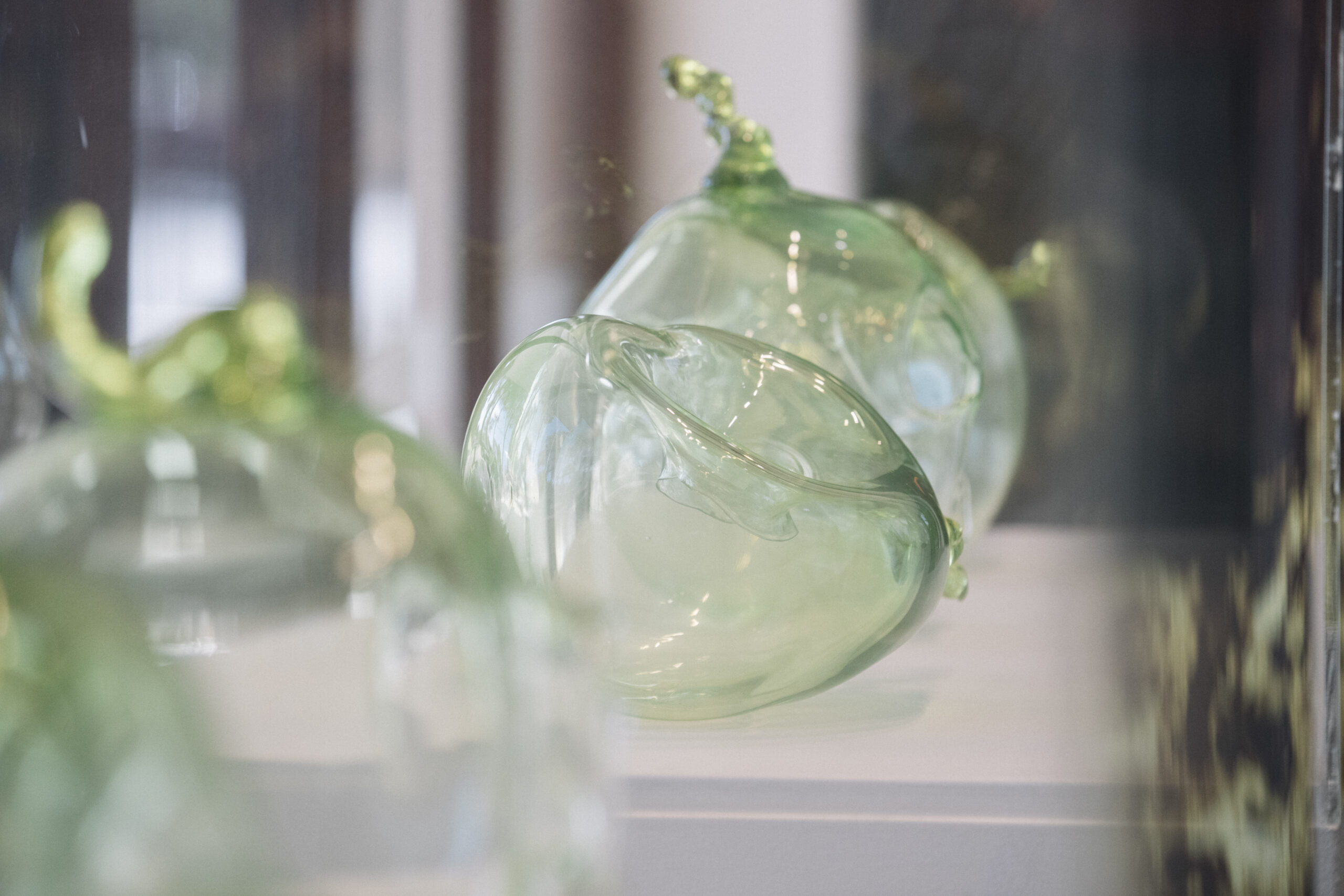
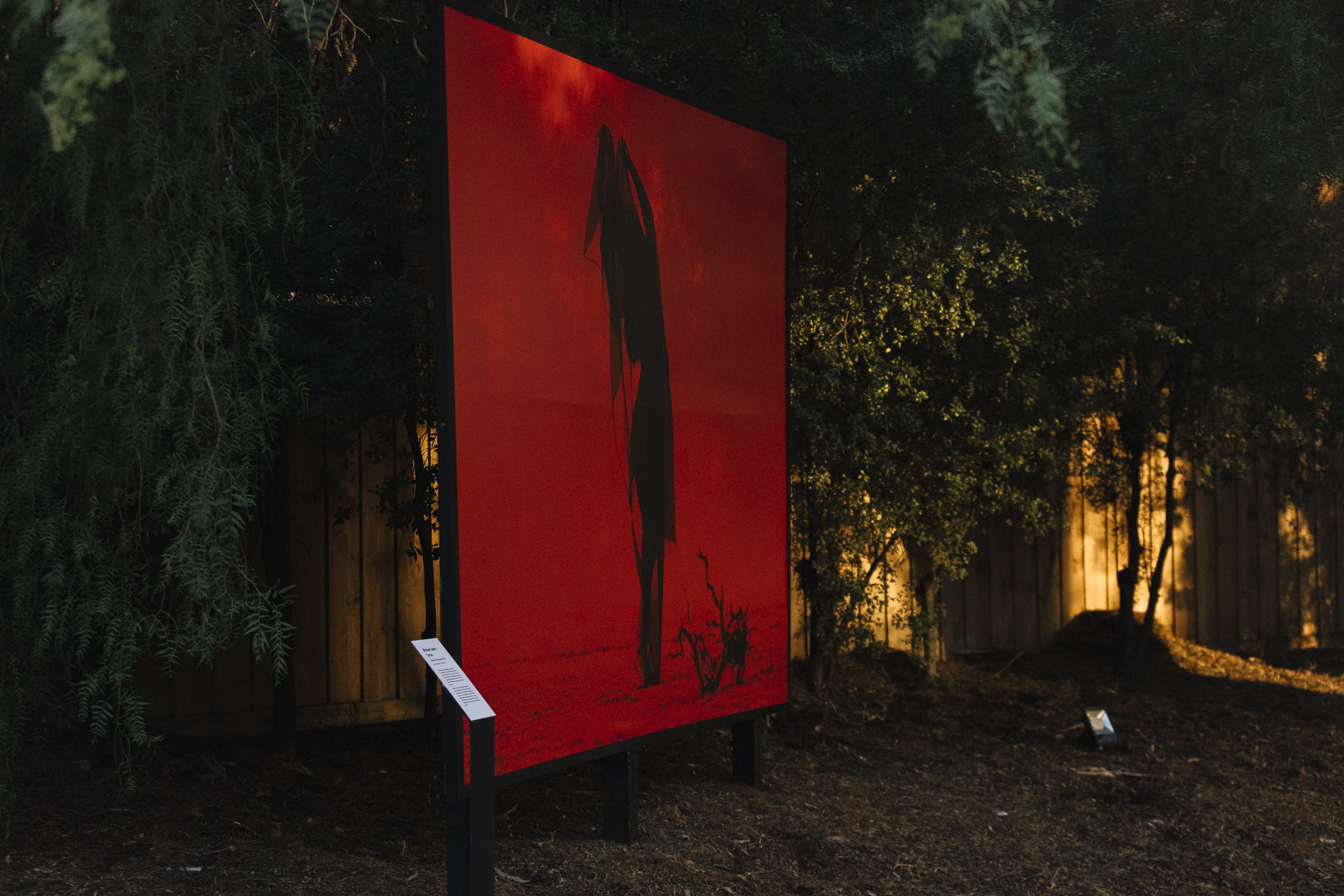
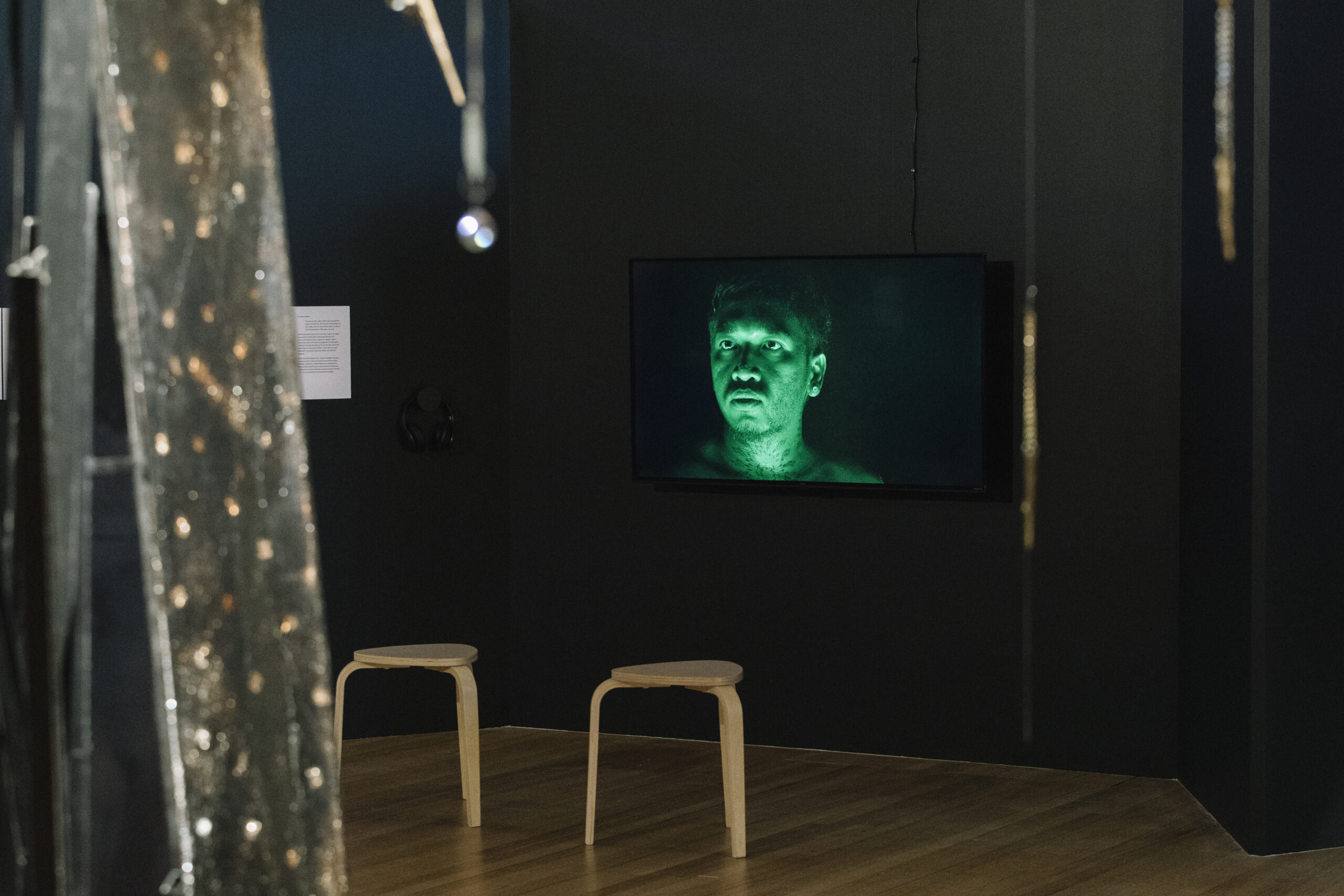
Molten Tongues installation views photographed by Thomas McCammon, January 2026, Incinerator Gallery, Melbourne/Naarm, Australia.
Curatorial extended
The exhibition takes its cue from the historic site of the gallery itself: the Essendon Incinerator, a modernist structure designed in 1929 by Walter Burley Griffin and Marion Mahony Griffin. Originally built as an innovative solution to the environmental hazards of an open landfill near the Maribyrnong River, the Essendon Incinerator fused aesthetic vision with civic utility—transmuting waste through flame. Today, this site of combustion becomes a crucible for contemporary and creative reflection: a space where art and design reckon with heat, pollution, renewal, and the stories that smoulder beneath the surface.
In this context, the Pyrocene—a term coined by environmental historian Stephen J. Pyne in 2015—provides a lens through which to consider the current epoch as one defined not just by human impact, but by humanity’s elemental relationship with fire. In contrast to the Anthropocene, the Pyrocene centres fire as both tool and symptom of planetary change. It asks how our fire-making—through fossil fuel extraction, land clearing, warfare, electricity, and more—has reshaped the Earth’s geology, atmosphere, and future.
Bringing together existing works, new commissions, and reimagined iterations, the exhibition is an invitation to witness fire not only as catastrophe or consequence, but as ceremony, kin, and catalyst—it is the glowing hearth and the burning field, the flare of desire and the fury of collapse.
Molten Tongues honours cultural burnings and rebirths, mourns the losses scorched by extractive economies, and dreams new futures through the embers of transformation. Here, fire is a living archive and an oracle—a medium through which we might sense what is burning and what is rising from the ashes.
Across the entirety of Incinerator Gallery, Molten Tongues unfolds over four chapters: the Pyrocene, the Age of Fire; Temple of Flames; the Hall of Singing Suns; and Hades Smoke.
Four Chapters expanded
Chapter One: The Pyrocene, the Age of Fire
In this opening chapter, audiences are introduced to the concept of the Pyrocene—a term translating to the Age of Fire. Coined by environmental historian Stephen J. Pyne in 2015, the Pyrocene considers the geological, cultural, and atmospheric impacts of human–fire relationships across time and place. From cultural burnings and pyric dawnings, to illuminating the night and extending diurnal activity; from farming, hunting, and cooking, to the mining of fossil fuels and explosive devastations of the world, this Promethean introduction to Molten Tongues explores landscapes where fire should, and should not, exist.
Moorina Bonini reverses the destructive force of consuming flame into one of birth, opening the hearth of the exhibition. Iluka Sax-Williams demonstrates cultural burning as an act that inscribes ancestral stories, knowledge, and practice through pyrography. Shireen Taweel employs celestial devices to map ancestral migration through the luminous bodies from the cosmos above. Ioanna Sakellaraki documents ancient and contemporary volcanic activity around the Pacific Ring of Fire, while Nicholas Burridge charts deep histories of fluid rock across the Victorian Volcanic Plains. Hannah Hallam-Eames tunnels into sulfuric subterranean environments to translate unstable terrains, and Diogo Evangelista publicly broadcasts a doomsday sunset of a not-too-distant future. Meanwhile, Yhonnie Scarce’s glass spheres mourn the destruction of Country through explosive colonial contamination, while cradling a future steeped in traditional ways of knowing.
This chapter both celebrates and forewarns the ways fire is wielded across past, present, and future. It is at once creation, transformation, and destruction—and we hold it in our hands.
Chapter Two: The Temple of Flames
This second chapter reflects upon our devotion and reverence for fire. Through private and collective acts of worship, the gallery unfolds like a prayer or vesper, manifesting a beguiling and sacred space for meditation and contemplation. Referencing cathedrals, temples, grottoes, and altars, audiences are invited to consider the transformative places and qualities of fire—whether actual or spiritual—and how, like a phoenix from the ashes, we may find ourselves within liminal states while gazing into a candle’s flame, participating in ritual burnings, or passing through a baptism of fire.
Across time and place, fire has demanded the shedding of skins: to let go, to offer up, to renounce. And yet, it also invites festivals of change, rites of becoming, and acts of desire, commitment and renewal devoted to deities of the flame.
Morehshin Allahyari honours visitations of jinn formed of smokeless fire, refiguring forgotten beings and re-situating erased histories. Sha Sarwari meditates upon the burning of discarded timber objects, poetically charging charcoal with cultural memory, while Ali Tahayori sharpens sparks of contingency through lens and mirror-work to refract glimpses of love. Ara Dolatian re-conjures figures of power, gender, and divinity to reflect on mythology’s evolving role, while Glynn Urquhart reimagines a constellation of digital deities and speculative impossibilities. Priyageetha Dia rebirths an ancestral tiger deity that shapeshifts across a burning future. Michael Jalaru Torres calls upon Country as Mother Earth, urging us to immediate action on a scorched land. Makiko Ryujin enacts traditional techniques that sanctify objects through ritual burning, while Yumemi Hiraki preserves memories of migration through molten acts of destruction. At the threshold, Felix Saturn invites us to gaze into a scrying mirror transformed by alchemical heat, divining futures yet to come.
Like a moth to flame, this chapter yearns with attraction—both compelling and nefarious—illuminating desire within this world, and beyond.
Chapter Three: The Hall of Singing Suns
In this third chapter, audiences encounter the language, body, and texts through which fire speaks. Artists perform the tongues of fire as forms of divine empowerment—of speech, witness, and understanding. At times, these works issue warnings against hypocritical speech and censorship; at others, they herald fire’s inherent power as a carrier of ancestral knowledge and collective unity.
Pyric gestures in this chapter confront histories of book burnings and the forced removal of language under colonial and religious regimes, alongside the burning of heretics, truth-tellers, witches, and arcane effigies. Yet there is also profound endurance here: Indigenous knowledges, queerness, and the continual expansion of cosmos echo through bodies, songs, and flames.
Jenna Lee incinerates and alchemises an ethnographic colonial dictionary that fails to capture living languages, blooming Country anew through its destruction. Christian Thompson sings the light of fire through a prismatic voice that reverberates across place, flowers, and history. Emily Parsons-Lord ignites radical luminations in darkness, extending cosmic rapture across poetry, landscape, and bodies. Joshua Serafin descends into the underworld—the primordial belly where dark and light converge—to greet queer ancestors dancing in healing ooze. Naomi Blacklock sings the sun as a space of personal power, invoking histories of self-sovereignty. Bon Mott channels cosmic frequencies and elemental vibration, attuning fire to speculative futures and expanded states of being.
This chapter reminds us that while it may be darkest before dawn, illumination—past and future—continues to sing through the night, through our bodies, as vessels of resilient knowledge.
Chapter Four: Hades Smoke
In this closing chapter, audiences are invited to contemplate the industry, technology, and ecology of fire. Situated within the historic Essendon Incinerator, the chapter reignites the modernist architecture of this Victorian heritage-listed site, originally designed by Marion Mahony Griffin and Walter Burley Griffin. Launched in 1929 as an innovative response to the environmental hazards of an open landfill near the Maribyrnong River, the Incinerator transmuted waste through flame, fusing civic function with socio-environmental form. Its design drew upon Prairie School principles pioneered by American architect, designer, writer, and educator Frank Lloyd Wright, harmoniously embedding architecture within the landscape.
Here, Molten Tongues pays homage to the layered histories of the site upon which Incinerator Gallery now stands. In Cheng Ran’s video work, we witness the ritual burning of joss paper—hell banknotes—offered as currency for the deceased to ensure safe passage to the next world. The work asks us to consider the complex tug-of-war between the human longing for the divine, and the spirit of consumerist greed, accompanied by a haunting funerary dirge. In Claybia’s earthenware, middens of oyster shells co-mingle with cigarette butts and bones, archiving ancient and contemporary waste. These are “dark ceramics for dark times,” and consider how the ash and decay of today is fossilised in capital, consumption, and combustion.
Housed among the furnaces, a new iteration of Diego Ramírez’s Vampires of the Earth invites reflection on the excavation and extraction of natural and cultural resources. These oil-slicked works mirror the awakened and slumberous states of vampiric beings with the exploitation of fossil fuels and arts labour.
Altogether, these works compel us to reckon with the flame of consumption through wry humour and urgent political charge. How does this flame consume the present? How does it revere the past? And how might it yet ignite a more just and sustainable future? Molten Tongues leaves us with these embers: questions that glow, smoulder, and resonate in the heat and urgency of now, with each artist wielding a fire that constellates towards the possibility of a more luminous tomorrow.
Midsumma Festival keynote
Time & Place invites artists to explore the unique time and place we find ourselves in today, in history, this socio-political time, and what it means for LGBTQIA+ communities the world over. Connected to this is how significant place is within this time 2025-26. What is the significance of place, of our geographic location in the world, our community and rights based on place and time, and significant events impacting LGBTQIA+ people now.
In this moment—marked by shifting cultures, political retrenchments, ecological collapse, and contested belonging—we gather at the embers of histories lived and destroyed whilst we collectively tend to the flames of our future through queer ardour.
Molten Tongues participates in Midsumma Festival’s keynote program Time & Place to consider the actual and metaphorical flames that ignite passion and activism over time, and those that have consumed people and place. The exhibition explores themes of fire through heat, desire, love, transformation and destruction, as well as the resilience held by LGBQTIA+ communities through the symbol of a phoenix rising from the ashes.
Opening hours
Molten Tongues is open Wednesday to Saturday
11am to 4pm.
Please note: Boadle Hall (chapter 3) will be closed during the following times for gallery programming:
- Thursday, 19 February from 11am-11.45am
- Thursday, 26 February from 11am-11.45am
- Friday, 27 February from 11am-1.15pm
- Thursday, 19 March from 11am-11.45am
- Thursday, 26 March from 11am-11.45am
- Friday, 20 March from 11am-1.15pm
Public program
A raging event of continual noise (the Sun): Opening night
Friday, 30 January, 6-8pm
Join us for the launch of Molten Tongues with a poetic performance by exhibiting artist Emily Parsons-Lord. This performance recreates the colour of the Sun through saturated plumes of smoke—an ode to the flame, warmth, and life-giver of our nearest star.
Image: Molten Tongues opening night performance by Emily Parsons-Lord by Thomas McCammon.
Thursday Late
Thursday, 26 February, 6-8pm
Join us at Incinerator Gallery for a solo piano accordion performance by exhibiting artist Glynn Urquhart, exploring layered textures, sustained drones, and melodic fragments. Treating the instrument as a system of resonant breath, the performance highlights the accordion's ability to swell and shimmer, creating unexpected emotional spaces. Original material sits alongside reworked songs, stretched and softened through the accordion's bellows. Listeners are invited into a shared space of attention where sound is felt as much as it is heard.
Prior to the performance, hear from artists and curator Jake Treacy who will introduce the first two chapters of Molten Tongues—Chapter One: The Pyrocene, the Age of Fire, and Chapter Two: The Temple of Flames.
Light refreshments will be served.
Image: Glynn Urquhart, Feral, 2025, live performance January 2025, Hobart, Australia, courtesy of the artist.
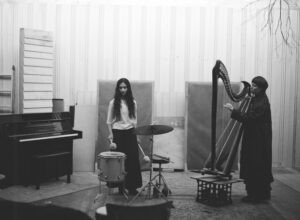
Thursday, 26 March, 6-8pm
Join us at Incinerator Gallery for an ambient music and poetry performance by multi-instrumentalist Genevieve Fry and poet Manisha Anjali, exploring intimate and dreamlike sound worlds with harp, textural percussion and incantations. The performance draws from the flame tree known as the palash or ‘forest fire’ in South Asia, the fleeting figures of a painter and a dictator, and intuitive improvisation.
Prior to the performance, join artists and curator Jake Treacy who will introduce the last two chapters of the exhibition—Chapter Three: The Hall of Singing Suns, and Chapter Four: Hades Smoke.
Light refreshments will be served.
Image: Whelk photographed by Arjun Sohal.
Artist bios
Ali Tahayori’s interdisciplinary practice ranges from conceptual photography to the moving image, and installation. Ali uses archival materials, narrative fragments and performative modalities to explore themes of identity, home, and belonging. Combining fractured mirrors with text and imagery, his works draw on ancient Iranian philosophies about light and mirrors to create kaleidoscopic experiences; moments of both revelation and concealment hint at the conflicted nature of his identity. Translating the traditional Iranian craft of Āine-Kāri (mirror-works) into a contemporary visual vocabulary, his practice combines a discourse about diaspora and displacement with an exploration of queerness – in both cases, poignantly testifying to his experience of being othered.
Born in Shiraz, Iran, Ali currently lives and works in Sydney, Australia (Gadigal Country). Raised in the oppressively homophobic climate of 1980s Iran, Tahayori assumed the identity of an outsider, further compounded by his migration to Australia in 2007. He holds a Doctorate in Medicine and MFA in Photomedia from National Art School.
Ali Tahayori is represented by THIS IS NO FANTASY.
Ara Dolatian’s interdisciplinary practice explores the relationship between cultural landscapes and the natural ecosystem. His ceramic works are hybrid ecosystems models of utopian cities and sculptural experiments. Ara’s work is also imbibed with numerous ideas centred upon conceptions of ‘the studio’ and the conceptual domain of socio-environmental politics. His latest exhibition, Mythos of the Island is a body of sculptural ceramic work inspired by archaeological relics.
Ara was born in Baghdad, Iraq, and now living and working in Melbourne, Australia. His sculptural practice is intimately bound to his Iraqi heritage and its ancient Mesopotamian history. Ara holds a Bachelor of Fine Art (sculpture) from RMIT and a Master of Social Science Environment and Planning.
Ara Dolatian is represented by THIS IS NO FANTASY.
Dr Bon Mott _/\_ (_/\_ pronounced "Bon") is a Queer, non-binary, neurodiverse artist, curator, and educator based in Naarm (Melbourne), Australia, on Wurundjeri and Boon Wurrung land.
Learning from Indigenous Knowledge and developing trust through collaboration as foundational principles, their internationally recognised, transformative, and process-driven transdisciplinary practice spans installation, performance art, film, and sculpture.
_/\_’s work interrogates and challenges conventional art paradigms by centering neurodivergent disability perspectives, non-binary identity, and the reuse of materials, and bronze casting to create immersive ceiling installations.
With a doctorate in performance art from the University of Melbourne, _/\_ advocates Indigenous collaboration, activism, Queer transfeminism and, and the intersection of art and astronomy through their practice. Identifying as lightning and the ghost of Bon Scott, _/\_ employs humor and the playful strategies of the trickster to foster inclusive social change.
Born in 1981, in Chifeng, Inner Mongolia, Cheng Ran graduated from the China Academy of Art, Hangzhou, in 2004. His video work is informed by eclectic sources including late-twentieth-century western art-house film, western and Chinese literature, popular music of the 1990s, and Chinese ink painting. His innovative works have been shown in solo and group exhibitions in China and internationally. Cheng participated in the Residency Artist Studio Project in Rijksakademie van Beeldende Kunsten, Amsterdam, 2013, and in 2016 was selected for the inaugural New Museum/K11 Art Foundation residency program, culminating in an exhibition in the Lobby Gallery, New Museum, New York. He lives and works in Hangzhou.
Cheng Ran's work is presented courtesy of White Rabbit Collection, Sydney. Donated through the Australian Government’s Cultural Gifts Program by Judith Neilson.
Dr Christian Thompson AO was born in 1978, Gawler, South Australia (Bidjara/Irish/Chinese). In 2010, Christian made history when he became the first Aboriginal Australian to be admitted into the University of Oxford in its 900-year history. He holds a Doctorate of Philosophy (Fine Art), Trinity College, University of Oxford, UK; a Master of Theatre, Amsterdam School of Arts, Das Arts, The Netherlands; a Master of Fine Art (Sculpture) and Honours (Sculpture), both RMIT University, Melbourne, Australia; and a Bachelor of Fine Art from the University of Southern Queensland, Australia. In 2015, he was mentored by performance artist Marina Abramovic. Thompson is a research affiliate at the Pitt Rivers Museum, University of Oxford, UK.
Christian has exhibited widely both nationally and internationally, having been included in exhibitions such as ‘Australia’ at the Royal Academy for the Arts, London; ‘We Bury Our Own’, The Pitt Rivers Museum, University of Oxford, Oxford; Valencia Institute of Modern Art, Valencia, Spain; ‘The Other and Me’, The Sharjah Museum, United Arab Emirates, ‘Hijacked III’; QUOD Gallery, Derby, United Kingdom; ‘Shadow life’ Bangkok Art and Cultural centre, Bangkok, Thailand; and ‘The Beauty of Distance/Songs of Survival in a Precarious Age’, 17th Biennale of Sydney. In 2018 he was awarded an Officer of the Order of Australia for distinguished service to the visual arts, and as a role model for young Indigenous artists. A major survey exhibition of his work, Christian Thompson: Ritual Intimacy, curated by Charlotte Day and Hetti Perkins, toured throughout Australia from 2017–19. Thompson was the winner of the Bowness Prize in 2020 with his work ‘Rule of three’ (2020), and in 2021 was a finalist in both the Bowness Prize and the National Aboriginal & Torres Strait Islander Art Awards (NATSIAA).
Dr Christian Thompson AO is represented by Sarah Scout Presents.
Claybia (Cassandra Chilton and Molly O'Shaughnessy)
Claybia Ceramics is a collaborative practice between artists Cassandra Chilton and Molly O'Shaughnessy, both members of the long-running feminist art collective, the Hotham Street Ladies.
Established in 2017, Claybia is centred on hand-built, non-traditional ceramic sculpture. Their work explores the darker sides of art and life -using humour, feminism, the grotesque, and the everyday to reflect on a shared fascination with their own sinister ceramic history. Their motto: Dark Ceramics for Dark Times.
Cassandra grew up in Papua New Guinea and was introduced to ceramics as a child, learning from a local family later connected to the Bain family murders in New Zealand. Molly first learned ceramics from her grandmother, a former Boyd studio craftsperson who later created unsettling terracotta portraits while in psychiatric care at Royal Park Hospital.
Both artists have continued their ceramic education at the School of Art and Ceramics in Brunswick under the guidance of Shane Kent and Kate Jones, refining their technical knowledge and material fluency.
Diego Ramírez is an artist with dreams, a writer with hopes and a facilitator with beliefs. He has shown locally at ACMI in partnership with ACCA, NGV, Gertrude Glasshouse, Westspace, Sydney Contemporary, Blakdot and internationally at Deslave (Mexico), Human Resources (US), Torrance Art Museum (US), Art Central (HK), and Careof (IT). He has curated at Gertrude Contemporary, Seventh Gallery and Dogmilk Films. Ramírez has written locally for Art Gallery of Western Australia, Art and Australia, Disclaimer, MEMO, un Projects and internationally with NECSUS (NL) and BLUE journal (US x FR). He was the director of Seventh Gallery (2018-2023) and sat many assessment panels for local, state and federal funding bodies.
Diego Ramírez is represented by MARS Gallery.
Diogo Evangelista develops an artistic practice that explores the delicate intersections between nature, technology, perception, and transformation. Through diverse media and series, he investigates the liminal spaces where scientific observation, mythological imagination, and personal experience converge. Each of his works seeks to challenge traditional boundaries of representation, inviting viewers to contemplate the ephemeral and interconnected nature of existence. Diogo aims to create visual languages that transcend mere aesthetic experience, transforming viewers' perceptions of reality, identity, and interconnectedness.
Themes of regeneration, uniqueness, and systemic interdependence are central to his work. Diogo constantly challenges viewers to see beyond surface appearances and recognize the profound complexity underlying seemingly simple forms. Diogo’s work is a continuous dialogue between the physical and metaphysical, between personal experience and universal symbolism — an ongoing exploration of how we perceive, interpret, and connect with the world around us.
Diogo Evangelista is represented by Galeria Francisco Fino.
On the land of the Wurundjeri Woi-wurrung peoples of the Kulin Nation, award-winning artist Emily Parsons-Lord makes visually stunning, embodied installations and performances. They elicit wonder and provoke critical re-examination of some of our most fundamental materials: air and explosions. These materials of the climate crisis speak to both the invisibility and the spectacle of collapse, and the confluence of personal and environmental catastrophe.
Air is simultaneously local and global, encompassing the effects of breathing as well as the governance of polluters and policy-makers. Air is where what we jettison into seeming oblivion is caught and returned. It is a physical site, as well as a place to project our imaginations. An explosion is an extreme condition of air, a rapid state of transformation from one state to another. By shifting our experience of time to a geological timescale, the rapidity of change since the industrial revolution makes it clear that we are exploding. This is how it feels to explode. Through air and explosions Emily’s work interrogates the experience of witnessing this expanded unstable moment of multiple simultaneous catastrophes. It shifts in register and scale from the sublime to the relatable, humorous and queer.
Felix Saturn navigates architecture, material kinship, animism, and the wider occult ecosystem through the medium of glass. She translates these themes into contemporary sculptural and functional forms, where material processes give rise to spatial, symbolic, and alchemical resonance.
Utilising traditional methods, she applies a wide range of technical skills both as an artist and trade practitioner – offering leadlight design and fabrication for domestic and architectural settings. She is a glassblowing apprentice at r.a.g.e, focusing on skill-building to develop unique mouth-blown rondels and sheet glass for use in her sculptural work.
Glynn Urquhart is a multidisciplinary artist working across animation, projection, sound, and performance. Based in Naarm (Melbourne), and a graduate of the Victorian College of the Arts, his practice investigates identity and the shifting boundary between the physical and the digital through the use of play and experimentation with emerging technologies and digital animation techniques. Urquhart’s work has been exhibited in galleries, public projection programs, and film festivals in Australia and abroad.
Hannah Hallam-Eames is an artist, bushland regenerator and independent researcher. Her practice explores the radical instability of the ground, in particular; crude oil wells, glaciers, and volcanoes. This research encompasses immersive installations, born from meticulous field and laboratory research conducted within environments where solid geological terrains transition rapidly into liquid states.
These immersive installations serve as tangible manifestations of the interplay between synthetic and natural materials. Using only recycled and scrap materials, they feature a diverse range of processes, including waterjet-cut and hand-carved marble, microscopic images of Martian meteorites, live cyanobacteria, volcanic minerals and recycled, chipped, and thermo-formed plastic waste.
Most recently, Hannah was a fellow at the Postnatural Independent Program with the Institute for Postnatural Studies in Madrid, as well as being selected for the Ars BioArtica science and art residency program at the Kilpisjärvi Biological Station in northern Finland.
Iluka Sax-Williams is an award-winning multidisciplinary artist whose practice spans Indigenous Visual Art, Fashion, and Design. A proud Taungurung man of the Kulin Nation with Tibrean ancestry from Zenadth Kes (Torres Strait Islands), Iluka draws from his cultural lineages to create works rooted in ancestral knowledge.
His practice is deeply community-focused, with a strong emphasis on cultural education. Iluka facilitates workshops in Possum Skin Cloak-making, Pyrography, and immersive art experiences that promote cultural learning and connection. His Kangaroo skin artwork Woora Liwik was exhibited at the 10th Koorie Heritage Trust Art Show (2022–2023), where it received the RMIT University Emerging Artist Award.
Iluka’s work has expanded into public and exhibition spaces, including his contribution to Making the Metro Tunnel at Domain House Gallery, and the creation of the Bundjil and Waa Sculpture, an installation for Balnarring Primary School that symbolises ancestral knowledge and cultural continuity.
In 2024, his design for the First Peoples Melbourne Art Tram was launched as part of RISING Festival, later earning a Gold Anthem Award for Social Impact. In 2025, Iluka presented Dabana at YIRRAMBOI Festival, featured on the cover of Beat Magazine, and participated in the inaugural Victorian First Peoples Art & Design Fair.
Iluka continues to expand his practice, using art as a platform for cultural expression, storytelling, and community empowerment.
Ioanna Sakellaraki, born 1989, is a Greek visual artist and creative practice researcher whose work investigates the relationship between loss, memory and fiction. Rooted in photography yet expanding into collage and archival practices, her work draws on personal experiences and historical narratives to re-imagine them materially, symbolically and subjectively.
Born in the Athenian suburb of Petroupolis, Ioanna grew up in a household shaped by dual influences: a mother whose resilience and devotion taught her persistence and discipline, and a father whose adventurous life at sea inspired her to remain open minded and free in spirit. From this balance of care and exploration, she learned to approach the world with both determination and curiosity from an early age. After passing the national exams in Greece, she studied Journalism at the National and Kapodistrian University of Athens, where she immersed herself in aesthetics, classics and literature. Her first artistic awakenings came during outdoor seminars on myth and psychoanalysis held in ancient ruins and amphitheaters across her hometown.
Her achievements include the Royal Photographic Society Bursary Award (2018), a Sony World Photography Award (2020), the Reminders Photography Stronghold Grant in Tokyo (2019), and the International Photography Grant Creative Prize (2019). She has also received funding from Arts Council England (2021) and has been nominated for the Inge Morath Award by Magnum Foundation (USA), the Prix HSBC, Prix Levallois and Prix Voies Off (France).
Joshua Serafin is a multi-disciplinary artist who combines dance, performance, visual arts, and choreography. Born in the Philippines, they are currently based in Brussels. They are a house artist of Viernulvier for the season 2023-27.
Exploring themes of transmigration and queer politics, Joshua centers their practice on Otherness, aiming to translate ideas of alterity and otherworldly narratives into embodied performance and forms of speculation. Their series “Cosmological Gangbang” is the result of their most recent artistic research, having unfolded in several iterations across different media, namely: Timawo, Creation Paradigm, VOID, and PEARLS, for which they are currently touring.
Joshua's artistic process is an intense sociological exorcism of Filipino identity about global ideologies, and contemporary phenomena, unpacking the historical violence of its feudal contemporary society and its dehumanizing normality. Enfolding these sites of creation into queer + trans methodologies intuited from within tropical myth but also inspired by the dreamwork of a nonbinary cosmopolis populated by figures emancipated from colonial gender and embodied by turns in diverse states of solemnity and play. Joshua’s globally acclaimed performance is committed to dwelling within interstitial spaces, a refusal to participate in dimorphic structures so they can craft an idiom where they can speak from the said in-betweenness.
Their work has been shown internationally, most notably in, Esplanade, Singapore, BIT Teatergarasjen in Norway, Anti Festival in Finland, Night Shift in Ostend, Beursschouwburg in Brussels, Tai Kwun Contemporary in Hong Kong, Haus Der Kulturen der Welt HKW, HAU Hebbel am Ufer in Berlin, Tono Festival in Mexico, Amant in New York. They were invited to Participate in the 60th International Art Exhibition of La Biennale di Venezia curated by Adriano Pedrosa.
Joshua Serafin is represented by Caravan Production.
Jenna Lee is a Gulumerridjin (Larrakia), Wardaman, and KarraJarri woman with Japanese, Chinese, Filipino, and Anglo-Australian (Irish and Scottish) ancestry.
Jenna's practice centres on exploring language, materiality, and the transformation of inherited narratives. Deeply intrigued by what is lost in translation, Jenna explores the spaces between words—the felt but unseen—capturing the subtleties that surround language. Her work channels these overlooked nuances into immersive installations, works on paper, sculpture, and multimedia.
Working primarily with books, viewed as colonial artefacts, Jenna interrogates dictionaries that have poorly combined First Peoples languages alongside Larrakia linguistics, using them to describe better the world she sees around her. Through meticulous deconstruction and reconstruction, she engages with materials that echo the past, revealing the hidden stories they carry. Her work seeks to uncover the unseen forces shaping our understanding of history and identity, drawing attention to what time has eroded and collective memory has suppressed.
Jenna’s practice has been recognised through numerous awards, including the 2024 Waterhouse Natural Science Art Prize, the 2023 Hazelhurst Art on Paper Award (Emerging Artist), the 2023 Australian Book Design Association Award for Emerging Designer, the 2020 Wandjuk Marika 3D Memorial Award (NATSIAA), and the 2019 Dreaming Award (National Indigenous Art Award, Australia Council). She has also been a finalist in major prizes such as the 2024 Wynne Prize, the 68th Blake Art Prize, and the National Works on Paper Prize.
Jenna’s work has been showcased in national and international institutions, including the National Gallery of Victoria, TarraWarra Museum of Art, and the Pitt Rivers Museum in Oxford.
Jenna Lee is represented by MARS Gallery.
Makiko Ryujin is a wood turner and photographer who is based in a new studio in Naarm/ Melbourne Australia.
Born in Aizu Wakamatsu in the Fukushima prefecture of Japan, she grew up in Takasaki, in Gumma, before spending one year of high school in Jakarta, Indonesia, and finishing her high school studies in Melbourne, Australia. Following high school, Makiko completed a Bachelor of Photography at RMIT in Melbourne. In late 2014 she started studying woodwork part-time with her mentor Carl Lutz. By mid 2016 Ryujin was focusing on developing her craft as a commercial practice. Her wood-turning work calls heavily upon her childhood in Japan. The sacredness and form of the ritual objects within Japanese culture inform the proportions and design of the objects Ryujin creates.
Makiko Ryujin is represented by Galerie Artempo.
Michael Jalaru Torres is a Djugun–Yawuru immersive artist, fine art photographer and poet, with connections to the Gooniyandi, Jabbir Jabbir and Ngarluma peoples. Founder of Blak Lens, he has exhibited nationally and internationally at leading institutions and festivals, including the Ballarat International Foto Biennale, Red Earth Arts Festival, Incinerator Gallery and Blak Dot Gallery. Torres’ work was the focus of a solo exhibition at the Art Gallery of Western Australia in 2022.
Michael's work explores social history and the political and cultural identities of community members from the Kimberley region of Western Australia through innovative portraiture and abstracted landscape photography. The artist's own story is also woven throughout his works, interlinked by Michael’s imperative to map and understand not only himself but others through the lens of his camera.
Moorina Bonini is a proud descendant of the Yorta Yorta Dhulunyagen family clan of Ulupna and the Yorta Yorta, Wurundjeri, and Wiradjuri Briggs/McCrae family. As an artist of Aboriginal and Italian heritage, her practice critiques and disrupts the eurocentric frameworks that shape institutional perceptions of Indigenous identity. Grounded in Indigenous Knowledge systems, Moorina’s work challenges colonial narratives, re-centers Aboriginal perspectives, and examines the intersections of culture, history, and representation.
Moorina is particularly interested in practice-led research as a method for interrogating the western binaries and categorisations imposed upon Aboriginal peoples, both historically and in contemporary society. Through her work, she examines the ways in which Indigenous ways of knowing, doing, and being resist and transcend these imposed structures, creating space for self-determined representations of Aboriginal identities and experiences.
Working across installation, moving image and cultural practice, Moorina has exhibited both nationally and internationally, including at ACMI, The Shed (New York), Sydney Festival, the Museum of Contemporary Art (MCA), the Centre for Contemporary Photography, and the National Gallery of Victoria (NGV). Recent major commissions include TarraWarra Biennial 2025: We Are Eagles, and RISING Festival (2025). She is currently a studio artist at Gertrude Contemporary (2024–2026).
Morehshin Allahyari (Persian: مورهشین اللهیاری), is a Bay Area based Iranian-Kurdish artist, using 3D simulation, video, sculpture, and digital fabrication as tools to re-figure myth and history. Through archival practices and storytelling, her work weaves together complex counternarratives in opposition to the lasting influence of Western technological colonialism in the context of MENA (Middle East and North Africa).
Morehshin has been part of numerous exhibitions, festivals, and workshops around the world including Venice Biennale di Architettura, New Museum, The Whitney Museum of American Art, Pompidou Center, MoMa, Victoria and Albert Museum, Queens Museum, and Museum of Modern Art, Taipei. She has been an artist in residence at Carnegie Mellon University’s STUDIO for Creative Inquiry, Autodesk Pier9 Workshop in San Francisco, the Vilém Flusser Residency Program for Artistic Research in association with Transmediale, Berlin, Eyebeam’s one year Research Residency, Pioneer Works, and Harvest Works. She has been featured in Art21, The New York Times, BBC, Huffington Post, Wired, National Public Radio, Parkett Art Magazine, and Al Jazeera, among others. Morehshin’s work has been the subject of critical analysis across books, academic articles, and dissertation chapters of over 100 publications.
She is the recipient of the Gold Art Prize (2025), Creative Capital Award (2025), The University of California, Berkeley Chancellor’s Postdoctoral Fellowship Award (2024), The United States Artist Fellowship (2021), The Joan Mitchell Foundation Painters & Sculptors Grant (2019), The Sundance Institute New Frontier International Fellowship (2019), and the Leading Global Thinkers of 2016 award by Foreign Policy magazine. Morehshin is an assistant professor of Digital Media Art at Stanford University.
Naomi Blacklock is an artist based in Meanjin (Brisbane), Australia whose practice maps the nexus of embodied performance, cultural heritage and gender identity. Working across a range of media, from experimental sound and video installation to performance and sculpture, her work creatively examines the mythologies, archetypes and harmful histories of gender and cultural identity through an intersectional feminist lens. Her ritualised sound objects and performances are intended to amplify the body and the voice through performative bodily precision and aural screaming.
In 2019, Naomi was awarded her Doctorate of Philosophy from Queensland University of Technology for her thesis Conjuring Alterity: Refiguring the Witch and The Female Scream in Contemporary Art. Her work has been presented at Hobart’s Art Festival, Dark Mofo and in numerous Galleries and Artist-Run Initiatives both locally and nationally. She is a Co-Director of Brisbane’s ARI Boxcopy, where she developed and delivers the experimental music program Sound Offering and is a founding member of Brisbane’s CLUTCH Collective, a Brisbane-based ARI that delivered exhibitions from the back of a 3-tonne truck.
Nicholas Burridge is a multi-disciplinary artist whose research-based practice is informed by material, place, and history.
His current body of work investigates the term ‘Terraforming’, in the context of focusing attention upon the ways humans are re-engineering the earth. Nicholas contributes to this history of transformation through the re-forming and melting of basalt, the stone we walk upon in the Victorian Volcanic Plains. Nicholas activates this emblematic material through the process of melting and transforming it back into a ‘fluid-rock’. This intervention upon the stone is a remembrance of Melbourne’s geologic past while also being an expression of our current human-driven geologic epoch, the Anthropocene.
Priyageetha Dia works with time-based media and installation. Her practice braid themes of Southeast Asian labour histories, speculation of the tropics, and ancestral memory meeting machine logics. Through archival and field research, she explores nonlinearity and practices of refusal against dominant narratives.
Recent exhibitions include 4th Bangkok Art Biennale (2024); Manifesta 15, Barcelona (2024); 60th La Biennale di Venezia, Venice (2024); Arts House, Melbourne (2024); Diriyah Biennale, Saudi (2024); Frieze Seoul (2023); Singapore Art Museum (2023); Kochi-Muziris Biennale, Kerala (2022); La Trobe Art Institute, Australia (2022); National Gallery Singapore (2020); and Art Science Museum, Singapore (2019). She was an artist-in-residence at the NTU Centre for Contemporary Art Singapore in 2022 and the SEA AiR—Studio Residencies at the Jan van Eyck Academie in the Netherlands in 2023.
Sha Sarwari, a Hazara born in Afghanistan is multidisciplinary visual artist and graphic designer. His artistic practice encompasses a diverse range of mediums, through his work, Sarwari intricately weaves together allegorical layers, resulting in a visual experience that evokes poetic sense.
His work captures the essence of a liminal space, a realm suspended between two worlds, longing and belonging, with a pointed reference to the sociopolitical discourse around, migration, identity, place, memory, nationhood, and personal lived experience.
In his recent works, Sha intentionally embeds the visual aesthetic of Farsi scrip ‘Nastaliq’. By incorporating this distinctive script into his work, he not only pays homage to his cultural heritage but also utilises its visual aesthetic to echo and convey a deeper conceptual meanings and narratives.
Sha holds and an Honours degree in Visual Arts from Victoria College of Arts, Melbourne University (2018), a Bachelor of Fine Art from the Queensland College of Arts, Griffith University (2015), a diploma of Graphic Design from TAFE (2005).
In 2020, Sha was one of the recipients of Incinerator Art Award; art for social change, in 2018 he was awarded the Fiona Myer Award for excellence at VCA, Melbourne University, In 2017 he was awarded Most Critically Engaged Work at CCP Salon, Australian Centre for Photography, Sha is the recipient of the inaugural prize of 2016 ‘Home’ art prize The Walker Street Gallery & Arts Centre, In 2015 Sha was awarded High commendation at The Churchie National Emerging Art Prize.
Shireen Taweel is a Sydney based multidisciplinary artist working on Gadigal Land. Shireen’s practice draws on speculative futurisms and alternative histories as a means to decolonise future cultural, political, and ethical dimensions of Space migration. Shireen focuses on the construction of future transcendental architecture and movement ecology informed by the Arab Sciences contribution of astronomy and celestial navigation instruments to the past and future of migration and pilgrimage. Shireen’s development and research is often site-specific working in collaboration with local communities, architecture and environment experimenting with the materiality of site. Conceptual applications of artisan techniques and speculative narrative drives cross-cultural discourse and dialogues of shared histories and fluid community identities.
Shireen’s works have been widely exhibited in notable institutions throughout Australia, Lebanon and Germany. She was most recently a participant in the TarraWarra Biennale 2025: We Are Eagles at TarraWarra Museum of Art. She was also Dunedin Public Art Gallery's International Visiting Artist for 2024, resulting in a solo exhibition 5364 nocturne. Recent group shows include In the Inner Bark of Trees at SAVVY Contemporary, Berlin (2023); this language that is every stone, Institute of Modern Art, Brisbane, curated by Hans Ulrich Obrist, Asad Raza, and Warraba Weatherall (2022); Making Worlds, Art Gallery of New South Wales, Sydney (2022). In addition to winning the 68th Blake Prize in 2024, Shireen was a finalist in the Woollahra Small Sculpture Prize (2022), was a highly commended finalist in the David Harold Tribe Sculpture Award (2022), and received the commendation prize for The Churchie Art Prize (2019). Her works are held in the collections of the Art Gallery of New South Wales, Sydney; and the National Gallery of Australia, Canberra. In 2023, Shireen was selected to participate in the artist-in-residence programme at Cité Internationale des Arts, Paris.
Shireen Taweel is represented by STATION Gallery.
Yhonnie Scarce was born in Woomera, South Australia, and belongs to the Kokatha and Nukunu peoples.
Yhonnie’s interdisciplinary practice explores the political nature and aesthetic qualities of glass and photography. Her work often references the ongoing effects of colonisation on Aboriginal people; in particular, her research has explored the impact of the removal and relocation of Aboriginal people from their homelands and the forcible removal of Aboriginal children from their families. Family history is central to Yhonnie’s work, drawing on the strength of her ancestors, she offers herself as a conduit, sharing their significant stories from the past.
Yhonnie’s professional profile continues to rise exponentially, beginning 2025 at the Sharjah Biennial, and upcoming projects in Australia and abroad. In 2024 she opened a survey exhibition ‘The Light of Day’ at the Art Gallery of Western Australia, and ‘Night Blindness’ at The Dowse Art Museum, New Zealand. In 2023 she exhibited at The Armory Show New York, and in 2022 her work ‘The Near Breeder’ was commissioned and exhibited at Ikon Gallery, Birmingham UK. Simultaneously, ‘Shadow Creeper’, another major installation, was shown at Palais De Tokyo, Paris, and acquired by the Foundation Opale, a museum dedicated to contemporary Australian Indigenous art, in Lens, Switzerland. Also in 2022, Yhonnie’s work ‘Orford Ness’ was created for and exhibited in the Aichi Triennale, Japan, before being acquired by the Mecca Collection, and she exhibited her installation ‘Missile Park’ at Gropius Bau, Berlin. This major commission was created for her survey exhibition at Australian Centre for Contemporary Art, Melbourne (ACCA) and Institute of Modern Art, Brisbane (IMA), which showcased works spanning the previous fifteen years of her career.
Yhonnie Scarce is represented by THIS IS NO FANTASY.
Yumemi is a multidisciplinary artist and arts worker based in nipaluna/Hobart. Originally from Hiroshima, Japan, Yumemi majored in Sculpture and Spatial Practice(VCA) and has called Australia home for over 16 years. Her work explores the intersections of memory, nostalgia and cultural practice grounded in site-specific and responsive experimentation.
Yumemi is interested in emotional responses to place and her collaborations are often rooted in community-based arts, education and socially engaged practices.
Recently, Yumemi has worked on projects such as ‘The Experimental Bathing Project’ as a research artist and bathing host, ‘Duoりんご’ an interactive set concept and performance, and at 'The Commonwealth of New Bayswater’ at MONA FOMA as a collaborative performer and installation artist for Jesse Lee Johns.
She is a current board member of CONSTANCE ARI, and works as a Youth Arts Officer at the Youth Arts and Recreation Centre in nipaluna/Hobart.
Yumemi Hiraki's artwork in Molten Tongues is part of the Moonee Valley City Council Art Collection.